Tuesday, October 9, 2012

Is neglect of oral health considered elder neglect?

"Elder Neglect" defined by the California Pen. code 15610.57 means either of the following 1) The negligent failure of any person having the care or custody of an elder or a dependent adult to exercise that degree of care that a reasonable person in a like position would exercise.(2) The negligent failure of an elder or dependent adult to exercise that degree of self care that a reasonable person in a like position would exercise. Elder Neglect includes, but is not limited to, all of the following:Failure to assist in personal hygiene, or in the provision of food, clothing, or shelter. Failure to provide medical care for physical and mental health needs....

This definition distinctly points out "personal hygiene" and "failure to provide medical care for physical ...needs"  Maybe since the term dental is not specified in the definition caregivers feel like it is not important?  Or maybe the term "medical need"  includes the total human body except the mouth?  But the last timed I personally checked, the human mouth was located in the human body.  In fact, I do think it is located, in the most vital part of the body term the "danger/red zone" , close to blood brain barrier and highly vascular.

So, if the mouth is in the body and the body is what is in need for "medical care", why am I seeing rampant decay in homebound frail elderly,  why am I seeing cases where a frail elderly's denture has not been remove from her mouth in 5 years,  why am I seeing severe periodontal disease in Alzheimer/Dementia patients?

These questions still perplex me, especially when there are mobile practitioners like myself that willing to put in the extra time to specialized in the frail elderly and homebound. 

I got it!  Its because the mouth can't be seen.  So a caregiver will call a practitioner for inflamed gushing wounds on a client's toe, but not a red gushing wound in mouth (periodontal disease).  Luckily that toe does have skin, connective tissue, and protective surface that can slow an infection, whereas, the gum infection in the mouth dumps right into the very vascular tissue and is carried throughout the blood stream to the brain, to the heart, and to the entire body.  This pathogenic bacteria can cause heart attacks, strokes, pneumonia, and diabetes. 

So...treat:                                   But don't ....treat??????????????????:

 
Lets see what we are missing...
 
 
Candidiasis from not removing dentures daily
 
Periodontal Disease from lack of daily oral care and profession cleanings
 
Rampant painful cavities/caries/decay from lack of preventative oral interventions
 
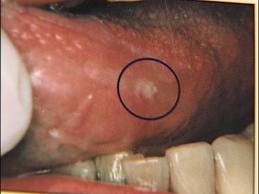
End-stage oral cancer that could have been caught earlier with
periodic oral exams from oral professionals
 
My point in this blog is don't "neglect" your mouth, don't "neglect" your clients mouth.  Take care of total body health, which includes your oral cavity and find a mobile professional that can help those who are homebound or disabled.  Incorporate consistent dental hygiene care and daily oral care in your facilities. 
 
Ohana Dental Hygiene Practice       www.ohanamobilehygiene.com        (714) 638-8709


Tuesday, October 2, 2012

Tuesday, September 25, 2012

Gum Disease and Dementia


If you're over 30, chances are you've got gum disease. A new study published in the August 30, 2012 issue of the Journal of Dental Research apparently confirms the gloomy news: based on data from a nationally representative sample, 47 percent of the U.S. population has gum disease. The investigation reported that about 9 percent of Americans have mild gum disease, 30 percent have moderate disease and 8.5 percent have severe disease. Gum disease isn't just a sign of poor dental health; it can also be an indicator of cardiovascular disease. (Although the American Heart Association states that no conclusive data demonstrates that gum disease actually causes or increases the risk of heart disease and stroke). In addition, new research published in the August 2012 edition of the Journal of the American Geriatrics Society shows an association between how often you brush your teeth and the risk of dementia in old age. The investigators followed nearly 5,500 seniors for 18 years and found that those who reported brushing their teeth less than once a day were up to 65 percent more likely to develop dementia than those who brushed daily. The lead investigator suggested that the bacteria that cause gum disease may affect the central nervous system and cause inflammation and damage leading to dementia. My take? These are interesting findings, but at this point we can only say that researchers have found an association between oral hygiene and dementia, not a cause and effect. Dental health is one of the keys to good health, but it is clearly far from the only key. Low-grade, persistent infections in the oral cavity and elsewhere can burden the immune system and weaken overall health. Teeth and gums are not separate from the rest of the body, and dentistry should not be so separate from general medicine. Taking care of your teeth and gums is vital. Be sure to brush and floss daily and see your dentist regularly so that any problems can be detected and corrected. by Dr. Andrew Weil
 
www.ohanamobilehygiene.com  Ohana Dental Hygiene Practice   714-638-8709
Mobile Dental Hygiene Care for the Elderly, Disabled, & Homebound

Tuesday, September 11, 2012

Periodontal Disease is linked to aspiratory pneumonia...
Don't let your clients be readmitted to the hospital.
 Make sure they get the oral preventative treatment and care they need.
"Scientists have found that bacteria that grow in the oral...
cavity can be aspirated into the lung to cause respiratory diseases such as pneumonia, especially in people with periodontal disease. This discovery leads researchers to believe that these respiratory bacteria can travel from the oral cavity into the lungs to cause infection."
http://www.perio.org/consumer/mbc.respiratory.htm

Tuesday, April 3, 2012

Oral Cancer Stats

Rates of oral cancer occurrence in the United States

Close to 40,000 Americans will be diagnosed with oral or pharyngeal cancer this year. It will cause over 8,000 deaths, killing roughly 1 person per hour, 24 hours per day. Of those 40,000 newly diagnosed individuals, only slightly more than half will be alive in 5 years. (Approximately 57%) This is a number which has not significantly improved in decades. The death rate for oral cancer is higher than that of cancers which we hear about routinely such as cervical cancer, Hodgkin's lymphoma, laryngeal cancer, cancer of the testes, and endocrine system cancers such as thyroid, or skin cancer (malignant melanoma). If you expand the definition of oral cancers to include cancer of the larynx, for which the risk factors are the same, the numbers of diagnosed cases grow to approximately 54,000 individuals, and 13,500 deaths per year in the US alone. Worldwide the problem is much greater, with over 640,000 new cases being found each year. Statistics on worldwide occurrence Oral cancers are part of a group of cancers commonly referred to as head and neck cancers, and of all head and neck cancers they comprise about 85% of that category. Brain cancer is a cancer category unto itself, and is not included in the head and neck cancer group.

Information from OCF http://oralcancerfoundation.org/facts/index.htm

ORAL CANCER IS NOT ALWAYS NOTICABLE TO THE LAY PERSON.  THIS IS WHY IT IS IMPORTANT TO SEE YOUR DENTAL PROFESSIONAL ON A REGULAR BASIS

Sunday, April 1, 2012

April is ORAL CANCER AWARENESS MONTH.


Even though smoking and tobacco products increase your risk of oral cancer.  It is more prevalent than you think among those who don't use tobacco products.  The Oral Cancer Foundation is a great resource for up-to-date statistics and research as it relates to oral cancer.  http://oralcancerfoundation.org/ 
The Oral Cancer Examination, done by your dentist or hygienist, is the most important part of the dental visit.  There is also new and emerging devices and techniques in which oral cancer is detected and diagnosed sooner.  Most times, by the time an oral lesion is seen in the mouth, it has metastasized to a much later stage of cancer.  As a mobile hygienist, I am often the one who first detects abnormalities in the oral cavity.  Since my patients are medically compromised, it is vital for me to give a thorough oral cancer exam and note and refer any abnormalities to their medical professional. 
Kimberly Cruz, RDHAP